




Support and resistance are fundamental concepts of technical analysis in forex trading. The core idea is to identify price areas where the market might reverse. Individuals who have just begun their trading journey would most likely base their trading decisions on these horizontal lines on the chart.
As we dive into the topic of support and resistance, here’s a look at what it might look like when featured in a chart.

Key Points
- Support and resistance are pivotal levels on price charts where the market often reverses or stalls: support indicates a price level where a downward trend is likely to pause due to a concentration of demand, while resistance indicates a price level where an upward trend may halt due to a concentration of supply.
- The credibility of a support or resistance level is established by how often it is tested and how often it holds.
- Traders typically buy at support and sell at resistance, but these levels can break under market pressure, at which point former support may turn into resistance, and vice versa. Dynamic support and resistance are adaptive levels shown by moving averages, indicating potential price rejection areas.
What is Support?
Support is a price level at which the market tends to reverse a bearish move. The more times a support is verified, the more credibility it has.
How Do You Determine A Support Level?
A support level is easily recognised as a price point that markets cannot seem to break below. Whenever a market approaches a support level, prices are most likely to reverse to the bullish side. The more times a support level is tested, the more credibility it has.
For example, EURUSD is in a bearish trend, but markets can’t seem to break below 1.20000; this suggests a support area near 1.20000.


What is Resistance?
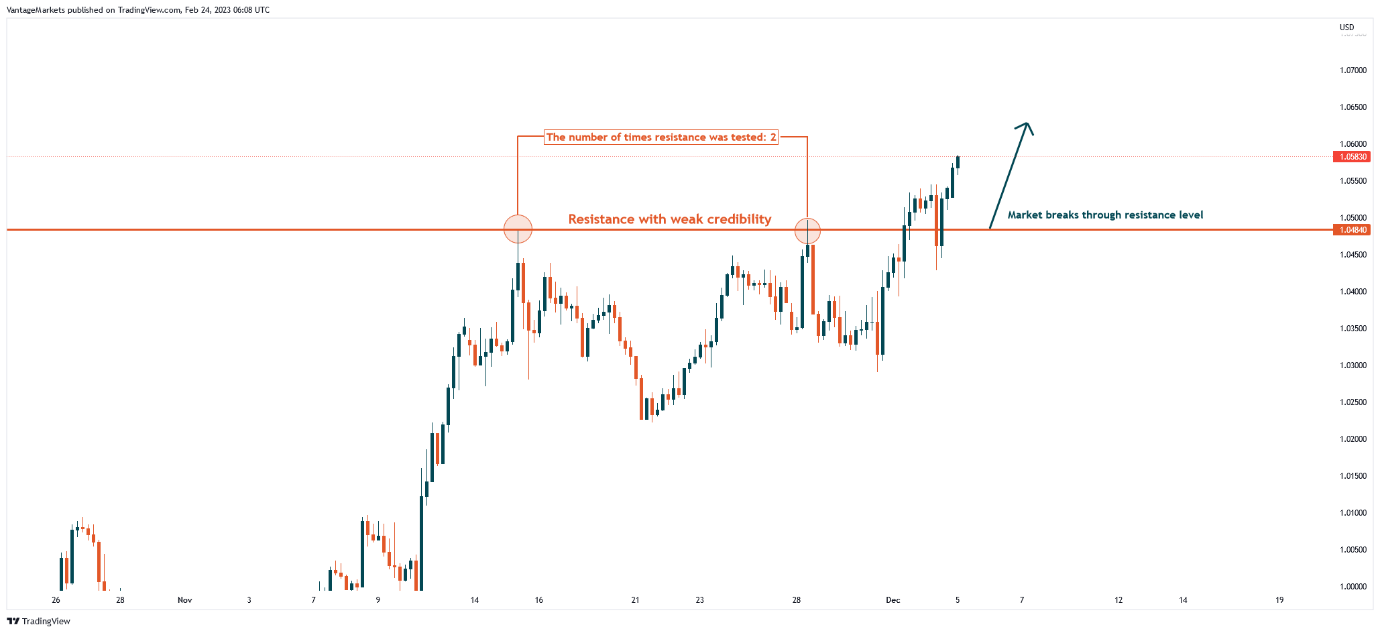
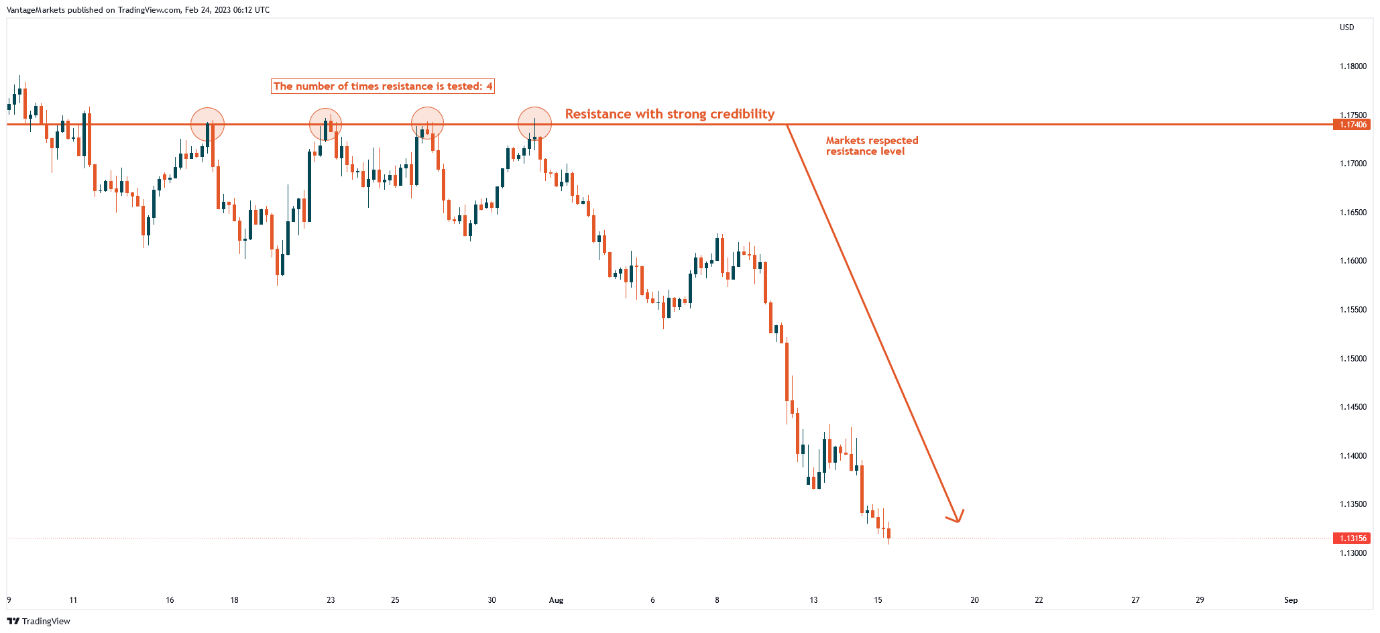
Resistance is the opposite of support. It is a price level at which the market tends to reverse a bullish move. The more times a resistance is verified, the more credibility it has.
How Do You Determine A Resistance Level?
A resistance level can be easily recognised as a price point that markets cannot seem to break higher. Whenever a market approaches a resistance level, prices are most likely to reverse to the downside. The more times a resistance level is tested, the more credibility it has.
For example, GBPUSD is in a bullish trend, but markets are unable to break above 1.2300; this suggests an area of resistance near 1.2300.
How to Trade Support & Resistance?
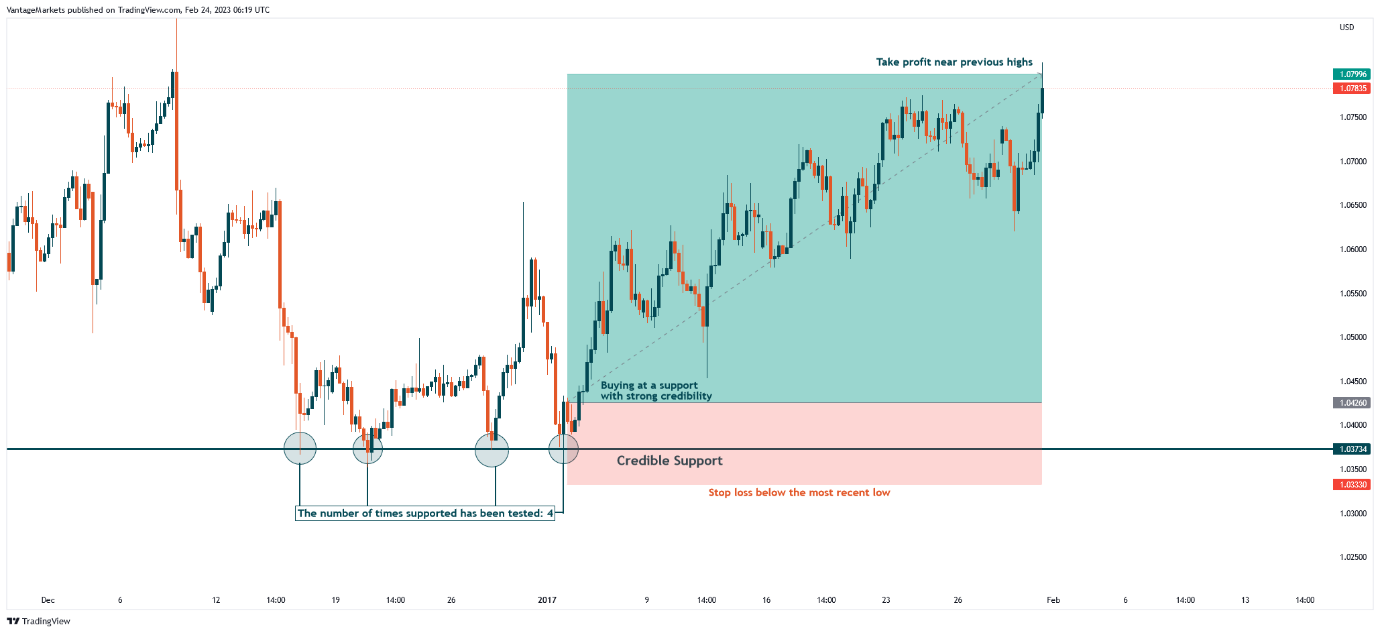
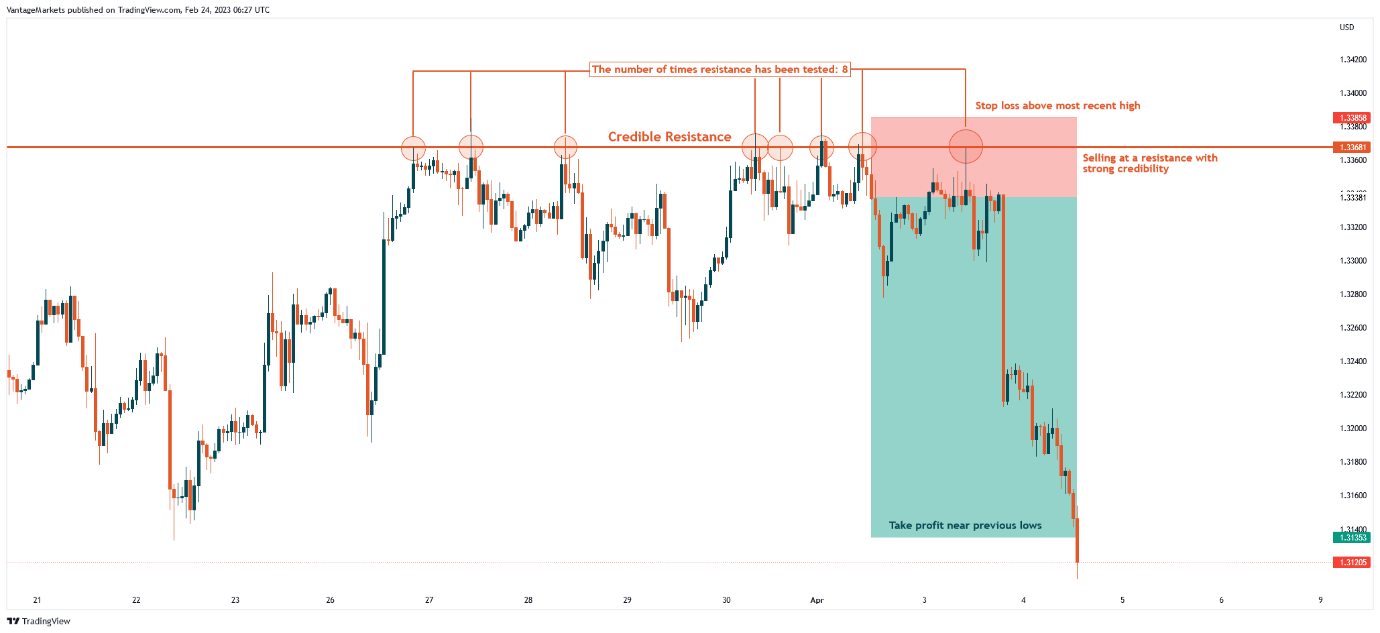
The rule of thumb is to “buy at support, sell at resistance.” This means that in a bullish market, when a support level is credible, a buy trade may be executed. While the reverse is also true, when markets reach a credible resistance level, a sell trade may be executed.
Traders can use support and resistance levels to determine potential entry and exit points for their trades. Figure 6 shows an example of buying at support in EURUSD, while Figure 7 shows an example of selling at resistance in EURUSD.
A Break in Support or Resistance
Support and resistance areas are not always observed by the market. There will be occasions when, even with presumably credible support, markets could go even further bearish, leading to a break of the support level.
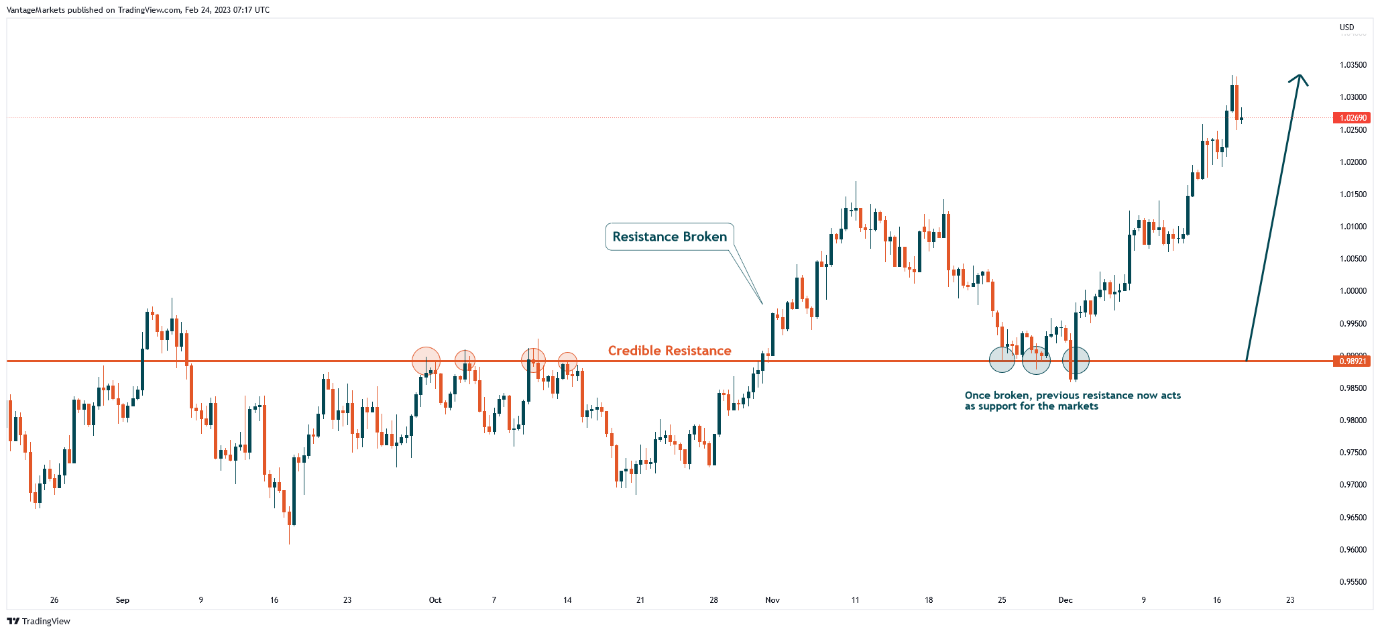
However, even if credible support or resistance levels are broken, other trade opportunities may arise. When a support level is broken, the same level can be used as resistance, and when a resistance level is broken, the same level becomes a support level.
Figure 8 demonstrates how a broken support level turns into a resistance level.

Figure 9 demonstrates how a broken resistance level turns into a support level.
Dynamic Support and Resistance
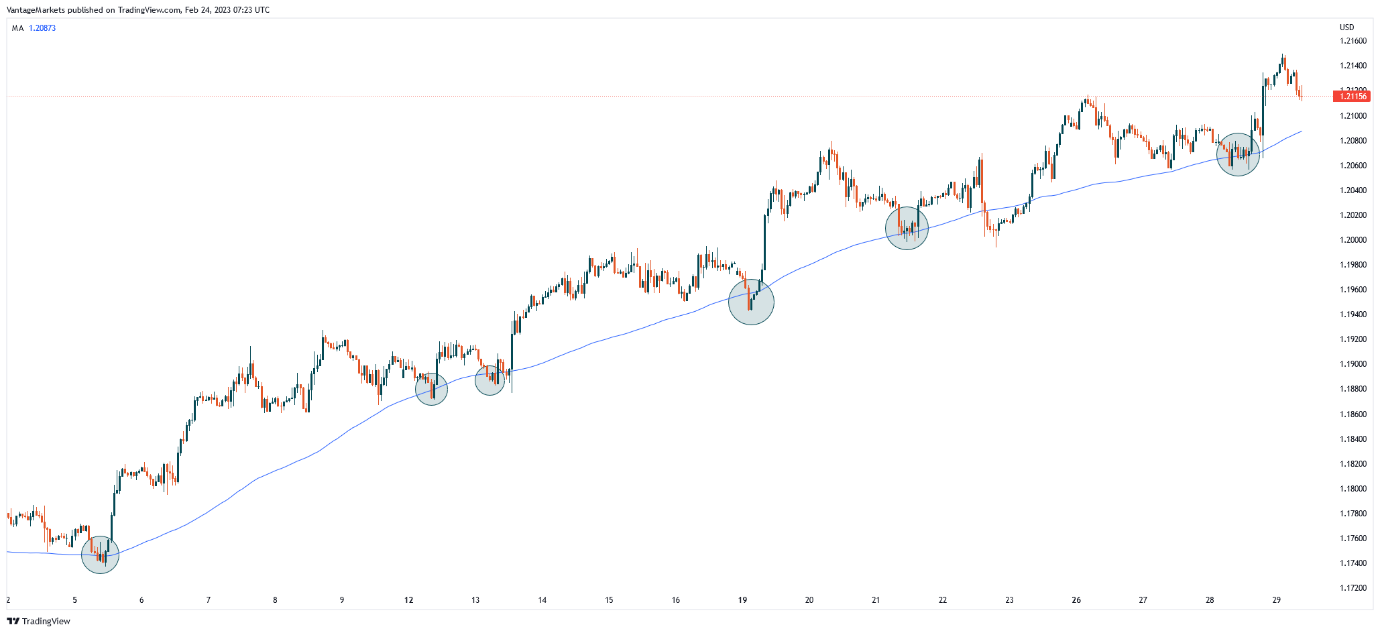
Dynamic support and resistance are represented by adaptive moving averages that highlight areas of rejection in the financial markets.
Figure 10 shows an example of dynamic resistance using a 100-period moving average in EURUSD. When the market approaches the moving average, it tends to repel from it, serving the same purpose as a horizontal resistance level. Figure 11 demonstrates the same concept but as dynamic support.

Conclusion
In conclusion, support and resistance are key concepts in technical analysis that traders can use to identify potential price reversals in financial markets.
It’s important to note that these levels are only indicative of a possible reversal in prices and should by no means be regarded as consistently reliable. To improve its success rate, traders should refer to more historical prices, continuously monitor price movements, and adjust their trading strategies accordingly.
Taking support and resistance trading to the next level? Check out our Complete Guide to Supply and Demand article to learn more.