
- Trading
Trading
-
CFD Trading
What is CFD Trading How to Trade CFD Why Trade CFD CFD Trading Strategies
- All Trading Products
-
Markets
All Instruments Forex CFDs Indices CFD Commodities CFD Stocks CFD ETFs CFD Bonds CFD Cryptocurrency CFDs
- Trading Accounts
- Trading Fees
- Trading Leverage
- Trading Server
- Deposit & Withdrawal
- Premium Services
-
CFD Trading
- Platforms
- Academy
- Analysis
- About
 Register
 Login
Login Register



-
AllTradingPlatformsAcademyAnalysisAbout
-
Search query too short. Please enter a full word or phrase.
-

Keywords
- Trading Accounts
- TradingView
- Trading Fees
Popular Search
- Trading Accounts
- MT4
- MT5
- Professional Trading Accounts
- Academy




Stock CFDs trading is one of the most popular ways to speculate on stock price movements, offering numerous potential opportunities for traders. Whether you're looking for short-term trading opportunities or portfolio diversification, trading stock CFDs allows you to participate in the stock price movement without owning the underlying shares.
Risk warning: CFDs are complex instruments and carry a high risk of losing money rapidly due to leverage. Ensure you understand the risks before trading.
Benefits of Trading Stock CFDs
Trading Stock CFDs allows traders to take advantage of market price movements. Whether you're aiming for short-term speculation or portfolio diversification, CFD trading offers several key benefits.
Dividend Income
CFD traders do not receive actual dividend payments as they do not own the underlying shares. However, some brokers may apply dividend adjustments on long CFD positions to reflect dividend payouts. These adjustments are not guaranteed and are subject to the broker's terms and conditions. Always check with your broker regarding their dividend adjustment policy.
Diversification
Diversification is a strategy that involves spreading your trades across different stocks to manage risk. It allows you to diversify your portfolio by investing in various industries, sectors and geographic regions. Compared to single-asset investments, a diversified stock portfolio can help mitigate losses during market downturns. Additionally, you can combine stocks with other assets like ETFs and bonds to further balance your portfolio.
Liquidity
Stocks are highly liquid assets, traded on major exchanges like NYSE, NASDAQ and LSE. Stock CFDs mirror, allowing traders to enter and exit positions quickly.
| Asset Class | Ease of Buying/Selling | Time to Access Funds | Key Characteristics |
|---|---|---|---|
| Stocks | High | Instant to 2 Days | Traded on major exchanges (e.g., NYSE, NASDAQ). High liquidity due to high trading volume. |
| ETFs | High | Instant to 2 Days | Similar to stocks, ETFs are traded on exchanges and offer high liquidity. |
| Bonds | Medium | Days to Weeks | Government and corporate bonds can be sold, but the process may take longer than stocks. |
| Real Estate | Low | Weeks to Months | Requires finding a buyer, legal processes and paperwork, making it less liquid. |
| Commodities | Medium | Days to Weeks | Physical commodities (e.g., gold, oil) may take time to sell, while futures are quicker. |
| Mutual Funds | Medium | 1-3 Business Days | Can be redeemed, but funds are typically paid out after the next trading day. |
Table 1: Overview of different asset classes.
Focus on Specific Companies
Stock CFDs allow traders to speculate on individual companies without purchasing actual shares. By conducting fundamental or technical analysis, traders can attempt to capitalize on price movements.
Risk vs. Reward in Trading Stock CFDs
Trading stock CFDs involves significant risks, including the potential for substantial losses due to leverage. It's crucial to understand these risks before trading.
Potential Rewards of Trading Stock CFDs
- Capital Appreciation: Stocks have the potential to increase in value over time, providing returns.
- Dividend Adjustments: Some brokers offer adjustments on long CFD positions to reflect dividends.
- Short-Term Opportunities: Active traders can benefit from short-term price movements.
Note: Always remember that past performance is not indicative of future results.
Risks Associated with Trading Stock CFDs
- Market Volatility: Stock prices can fluctuate due to market conditions, economic events or company performance.
- Potential Losses: Inexperienced traders may face losses, especially if they invest without proper research or risk management.
- External Factors: Economic downturns, geopolitical events and industry-specific challenges can impact stock prices.
Managing Risk when Trading Stock CFDs
- Diversify Your Portfolio: Spread your investments across different stocks and sectors.
- Use Stop-Loss Orders: Set predefined limits to automatically sell a stock if it drops below a certain price.
- Balance Your Portfolio: Regularly review and adjust your investments to align with your financial goals.
- Access Your Risk Tolerance: Understand your comfort level with risk and invest accordingly.
- Understand Leverage Risks: Trading CFDs involves leverage, which can amplify both gains and losses. Ensure you understand the risks before trading.
Explore More About Stock Trading



Award-Winning Broker
-

Best Broker
AustraliaInternational Business Magazine
-
Best Customer
Support AustraliaInternational Business Magazine
-
Best Overall Broker –
AustraliaInternational Business Magazine

Trade Stock CFDs On Different Types of Trading Platforms

MetaTrader4
- 30 built-in technical indicators
- 31 analytical charting tools
- 9 time-frames
- 4 types of trading orders

MetaTrader5
- 38 built-in technical indicators
- 44 analytical charting tools
- 21 time-frames
- 6 types of trading orders

TradingView
- 15+ chart types
- 100+ in-built indicators
- 50+ drawing tools
- 12 alert conditions

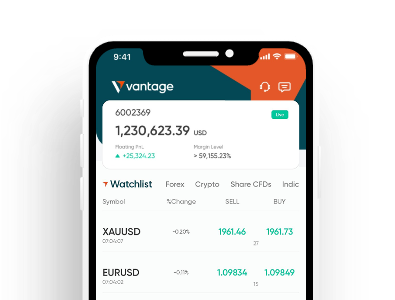
Vantage Mobile App
- 55 deposit methods globally
- 220+ daily product analysis
- 16 TradingView indicators
- 80,000+ copy traders
Choose a Trading Account Based on Your Experience Level
-
1
Beginner Traders
-
2
Experienced Traders
-
3
Professional Traders

High Volume Traders
- For traders looking for low and competitve commission, with only $1 per standard FX lot per side.




-
1
Register
Quick and easy account opening process.
-
2
Fund
Fund your trading account with an extensive choice of deposit methods.
-
3
Trade
Trade with spreads starting as low as 0.0 and gain access to over 1,000+ CFD products.
Frequently Asked Questions
-
1
Is stock trading better than forex trading?
Stock trading and forex trading serve different purposes. Stocks are often focused on long-term growth and dividend income. Forex Trading, on the other hand, focuses on currency fluctuations and short-term potential gains. Your choice depends on your financial goals, trading style and risk tolerance. -
2
Can you make money trading stock CFDs?
It is possible to profit from trading stock CFDs, but it depends on various factors, including market conditions, trading strategy, and risk management. Successful stock trading often requires thorough research, a disciplined approach, and an understanding of market trends. It’s important to be aware that trading involves risks, and returns are not guaranteed. when trading stock CFDs, it involves significant risk due to leverage. Profits and losses can be magnified. -
3
Is stock trading suitable for beginners?
Trading Stock CFDs is high risk, and may not be suitable for all investors. Beginners should start with a Demo Account to practice trading before considering live trading.
At Vantage, we have a library of free educational resources to help you with your trading education journey. Our demo account allows you to practice trading with virtual funds before risking real money. -
4
What are the risks of trading Stock CFDs?
The risks of trading stock CFDs include leverage risk, market volatility, margin calls, and overnight funding costs. It's crucial to understand these risks before trading. -
5
How much money do you need to start trading stocks?
The amount you need to start trading stock CFDs varies depending on the broker and account type. Some brokers allow you to start with a small deposit due to leverage, but it’s important to understand that leverage amplifies both potential gains and losses. With Vantage, you can trade US stocks through CFDs with $0 commission, allowing you to speculate on price movements without owning the actual shares. Always ensure you understand the risks before starting CFD trading.
*Other fees may apply.
Disclaimer: CFDs are complex instruments and come with a high risk of losing money rapidly due to leverage. Ensure you understand how CFDs work and whether you can afford to take the high risk of losing your money. The information is provided for educational purposes only and doesn't take into account your personal objectives, financial circumstances, or needs. It does not constitute investment advice. We encourage you to seek independent advice if necessary. The information has not been prepared in accordance with legal requirements designed to promote the independence of investment research. No representation or warranty is given as to the accuracy or completeness of any information contained within. This material may contain historical or past performance figures and should not be relied on. Furthermore estimates, forward-looking statements, and forecasts cannot be guaranteed. The information on this site and the products and services offered are not intended for distribution to any person in any country or jurisdiction where such distribution or use would be contrary to local law or regulation.